Ciara Norton
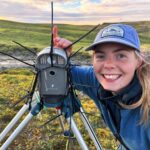
Ciara is a permafrost scientist currently pursuing a Master of Science degree at the University of British Columbia. She has three years of research experience studying alpine and tundra ecosystems across British Columbia and the Yukon. Her research focuses on using remote sensing to study landscape level changes caused by climate change. Ciara is currently specializing in permafrost science through her program at UBC, permafrost field program in Sisimiut with the Technical University of Denmark and current research with the RESILIENCE. Ciara’s role in RESILIENCE is studying how permafrost thaw is causing widespread Arctic landslides, signifying new tipping points of permafrost thaw are being crossed.
Research Project: Arctic landslides are crossing tipping points of thaw
The Arctic is experiencing rapid and accelerating warming, which is leading to permafrost thaw. However, as abrupt permafrost thaw such as landslides, and punctuated thaw such as thaw slumps occur, we do not yet know whether Arctic landscapes have reached tipping points. These disturbances form when thaw reaches critical depth thresholds and are increasing in magnitude due to accelerated thaw from Arctic warming. Abrupt thaw accounts for 40% of overall thaw in future projections of Carbon emissions through to 2300, and is not considered in current climate models. Thus, investigating abrupt thaw with future warming is critical for projections of global climate feedbacks and management of culturally important landscapes. Qikiqtaruk is underlain by ice-rich permafrost and is particularly vulnerable to thaw. Over 700 active layer detachment landslides occurred on Qikiqtaruk in August 2023 triggered by a three-week heat wave of temperatures approximately 5°C warmer than the 30-year average. Landslides removed the insulating tundra, exposing ground ice beneath and accelerating subsequent thaw. In 2024, over 20% of surveyed landslides have begun to transition into retrogressive thaw slumps, which are larger disturbances that undergo active thaw for years to decades.
Objectives – My research will address the question: Under what conditions do Arctic landscapes cross permafrost thaw tipping points and what are the consequences of this thaw?
I am answering these questions using over 80 repeat drone surveys, 16-timelapse cameras monitoring rates of thaw and local climate data. Understanding what landscape and climate conditions cause permafrost to cross tipping points of thaw is crucial for local communities to adapt to these changes and to inform global climate models of carbon released by abrupt thaw.